

Note: This is a two-week brief rather than the usual one-week edition. Axis Weekly began before the war as a smaller monitoring project, and the war has expanded both the scope of the conflict and the scale of the work required to track it well. We are building to meet that demand, including by onboarding new team members who are analytically rigorous, deeply engaged with the region, and committed to exposing propaganda. We also launched The Houthi Lane in parallel. Weekly cadence resumes next week.
Two Weeks in Brief
Although Trump declared the April 5 operation to rescue a downed F-15 pilot near Isfahan a success, Iran pointed to a different outcome. The IRGC’s joint operational command Khatam al-Anbiya, Iran’s wartime military headquarters, said the rescue attempt had cost Washington multiple aircraft, and warned that any targeting of Iranian civilian infrastructure “will open the gates of hell on you,” naming U.S. and Israeli sites “used militarily” anywhere in the region as fair game for retaliation. Foreign Minister Abbas Araghchi called U.S. threats against Iranian energy facilities a war crime.
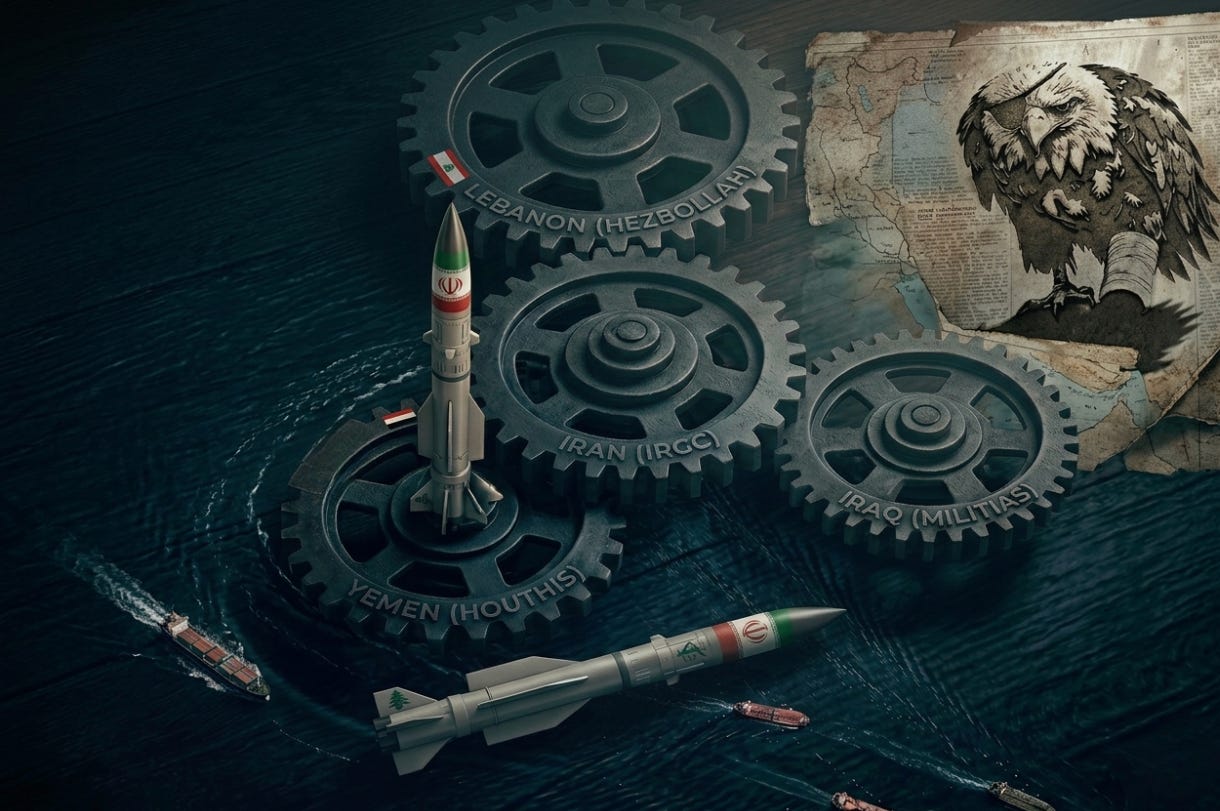
Iran, Hezbollah, and the Houthis pushed the “all fronts are one” claim across the period. The slogan was “وحدة الساحات” unity of arenas, and it appeared across every outlet. The IRGC named Yemen in strike communiqués covering operations the Houthis did not conduct. On April 9, the 40th day of mourning for Ali Khamenei, Iranian state media aired a written statement attributed to Mojtaba Khamenei, whom regime-aligned outlets have been presenting as the new Supreme Leader. Allegedly, Mojtaba Khamenei declared that Iran considers “all resistance fronts as a unified entity.” See the April 1–7 and April 8–14 Houthis’ Lane briefs for a fuller picture on how Axis Media manufactured this framing while the Houthis themselves did not fire on Israel during the ceasefire week.
The ceasefire Trump announced on April 7 and the ceasefire Iran said it had accepted were not the same deal. Washington said Lebanon was outside the scope while Iran said it was inside. Iran’s preconditions ran across Lebanon, the release of frozen assets, and a reparations track. Vice President JD Vance told Russian outlets Israel was ready to limit Lebanon strikes for the sake of a deal, while warning Washington would not uphold the ceasefire unless Iran opened Hormuz. Islamabad talks broke down within a day of starting on April 11, oil crossed $140, and by April 14 the United States had announced a maritime blockade Iran was already working to delegitimize.
Russia stepped in as the ceasefire’s narrative amplifier. The Russian MFA said “some forces are slowing the movement toward peace” and called publicly for Israel to stop the Lebanon strikes. A TASS explainer positioned Pakistan as the key mediator. China stepped back. On April 7, Beijing vetoed a UN Security Council resolution from Bahrain, Saudi Arabia, Kuwait, Qatar, and the UAE calling for a forced reopening of Hormuz. On April 11, Guancha published a long commentary explicitly rejecting the Western narrative that “China forced Iran” into the ceasefire. The Chinese MFA told Xinhua it was engaging all parties.
The Deep Dives below cover the rescue episode, the “unity of arenas” doctrine, Iran’s staged succession of Mojtaba Khamenei, the Islamabad breakdown, Lebanon during the ceasefire, Russia and China on mediation, and Iran’s reparations campaign against the Gulf.
Deep Dive
1. Rescue Mission and “Gates of Hell.”
On April 5, Trump announced on social media that a U.S. attempt to rescue a downed F-15 pilot near Isfahan had succeeded. The IRGC’s joint operational command Khatam al-Anbiya, Iran’s wartime military headquarters, said that Washington had in fact lost multiple aircraft during the attempt, claiming two C-130 transports and two Black Hawk helicopters had been destroyed. Within hours, Tasnim was publishing photos of what it called U.S. aircraft wreckage as proof, while Russian coverage ran the Iranian version with the headline “The enemy’s efforts failed.”
The IRGC paired the rescue claim with an explicit warning. In the same statement, Khatam al-Anbiya told Trump directly that targeting Iranian civilian infrastructure “will open the gates of hell on you,” naming U.S. and Israeli sites “used militarily” anywhere in the region as legitimate targets for retaliation. Foreign Minister Abbas Araghchi called U.S. threats against Iranian energy facilities a war crime.
Hezbollah-aligned outlets carried opinion coverage that worked the rescue episode hard. Al-Manar ran a column by Alloush titled “Trump: victories narrated… defeats lived,” arguing U.S. messaging was storytelling while real costs were borne on the battlefield. Al-Akhbar’s April 1 analysis framed Israeli losses in the Iran war as a turning point in the regional deterrence equation. Al-Ahed published a piece arguing Netanyahu was “fabricating” his victory and that regime overthrow rhetoric had collapsed.
Iranian outlets published a sustained Tasnim column titled “The ghost of Vietnam in the Middle East; Iran becomes the graveyard of American aggressors,” arguing Washington was repeating the hubris of earlier wars and that geography, the Strait of Hormuz, and the resistance network made Iran a far more lethal theater than Vietnam had been.
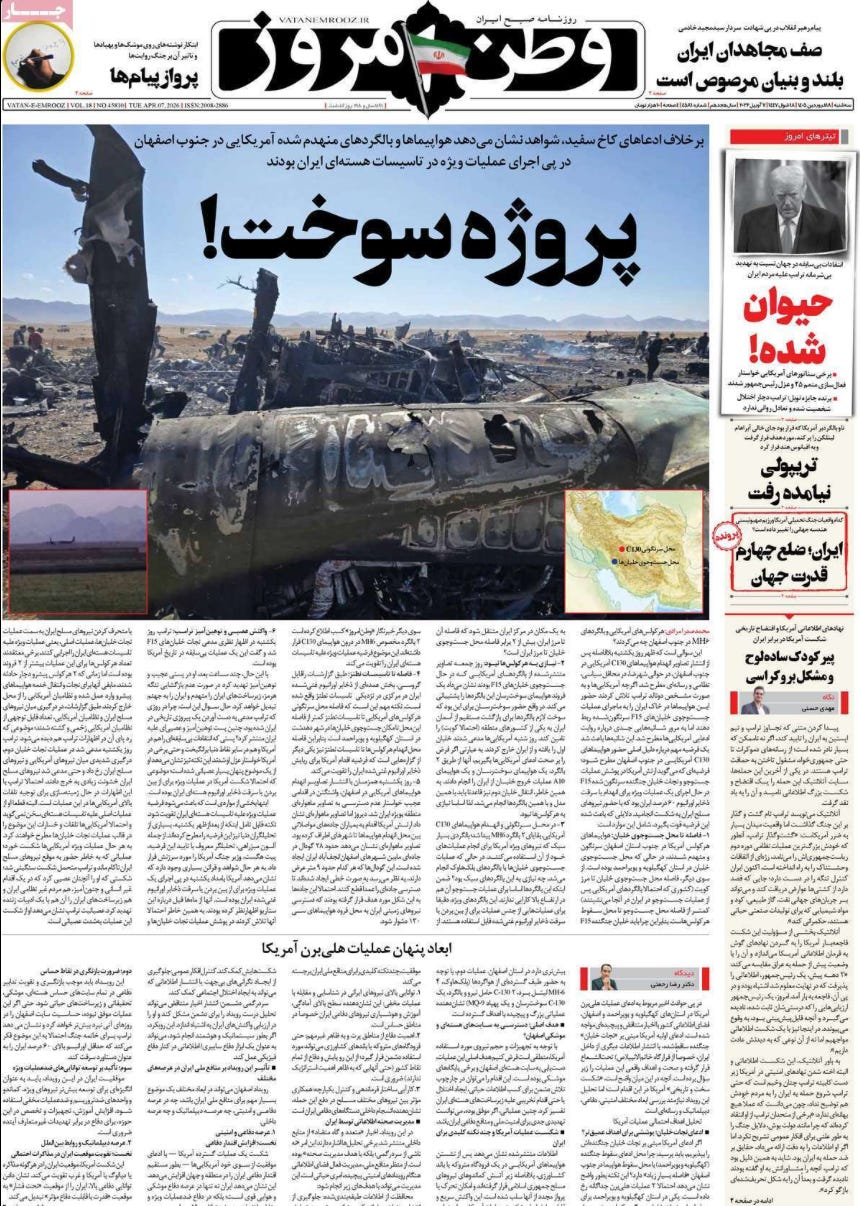
Houthi outlets worked the rescue episode as outright deception. Al-Thawrah published an opinion piece titled “The failure of the deceptive American rescue operation,” arguing the U.S. operation was not a genuine rescue at all but a cover story, and that its actual purpose was testing Iranian ground defenses in southwest Iran. 26 September ran a companion column titled “Suicide of Grandeur: Trump trapped in psychological defeat and the end of the unipolar era,” which folded the rescue episode into a civilizational-decline narrative about the end of a unipolar era.
Chinese outlets published a Guancha commentary titled “A scam from start to finish: how the U.S. and Israel ‘negotiated’ with Iran,” arguing that diplomatic overtures had functioned as cover for initiating the strikes and assassinations that opened the war, and framing the entire negotiation track as premeditated deception rather than failed diplomacy.
2. How Iran Turned “Unity of Arenas” Into a Ceasefire Veto
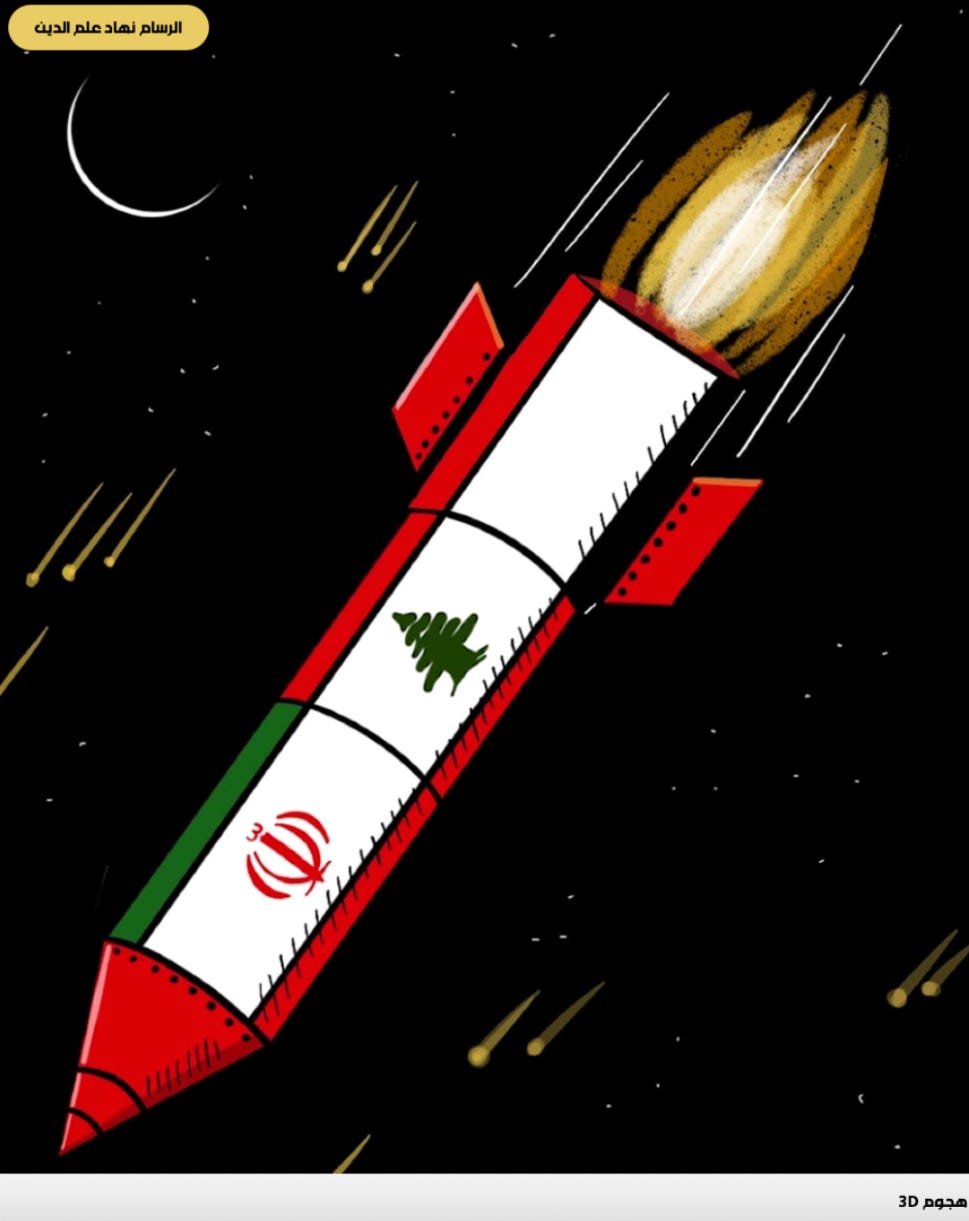
Throughout April, Iran, Hezbollah, and the Houthis framed strikes on Israel from Lebanese, Yemeni, and Iranian territory as a single coordinated campaign. The slogan was “وحدة الساحات” — unity of arenas — and it ran across every outlet. Coverage of the April 3 “One Axis, One Rank” rallies treated Iran, Lebanon, Yemen, and Iraq as a single theater.