

Week In Brief
The week opened with the EU’s January 29 designation of the IRGC as a terrorist organization and the USS Abraham Lincoln’s arrival in the Persian Gulf, triggering a cascade of retaliatory narratives and capability signals. By week’s end, Iran had designated EU armies as “terrorist groups” in a parliamentary spectacle, while announcing joint naval exercises with Russia and China, the seventh iteration of the “Maritime Security Belt” since 2019, scheduled for late February.
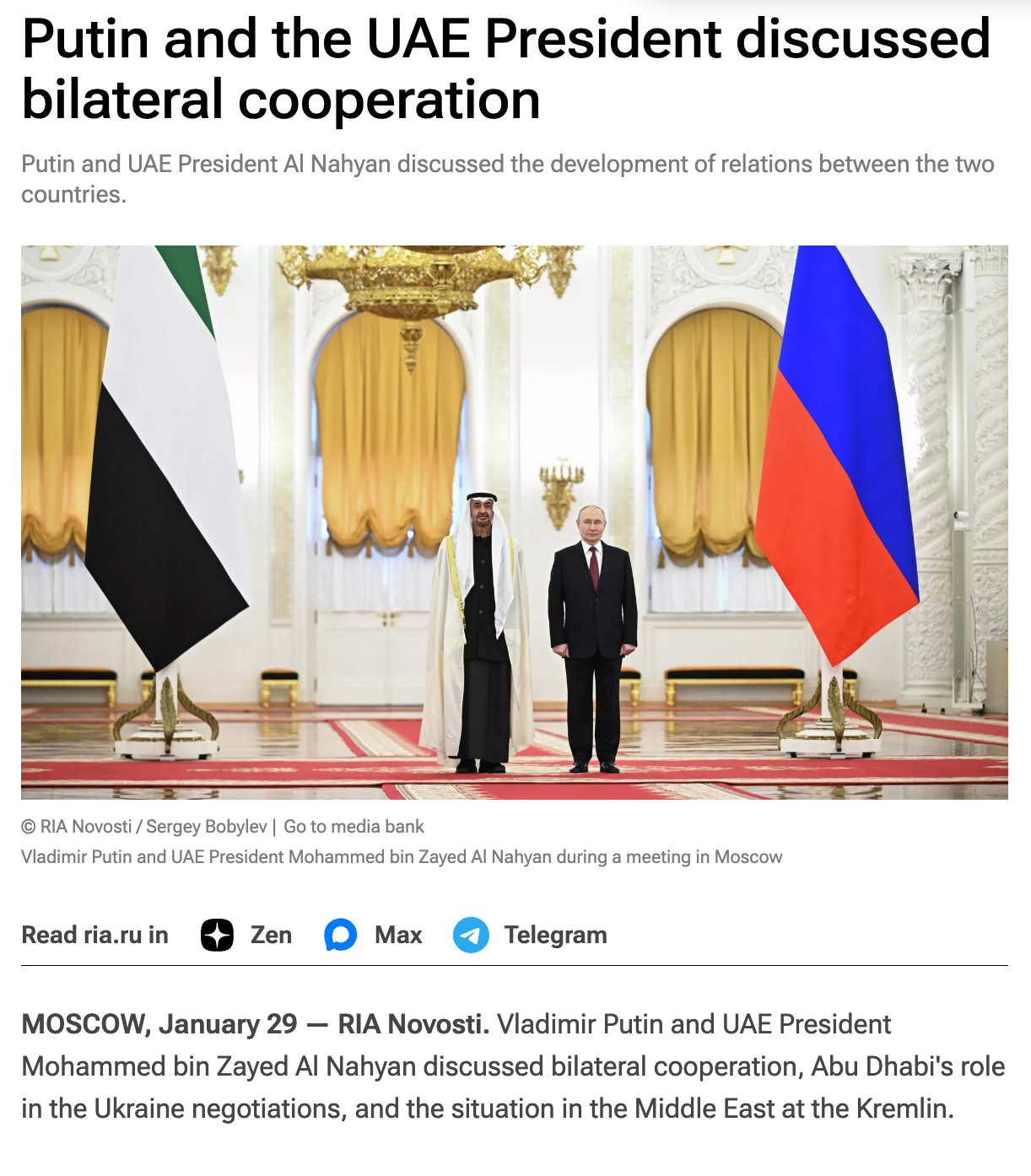
Russian media positioned Moscow as mediator and alternative pole (Putin-UAE summit, “positive” U.S. assessment of Abu Dhabi talks,) Trump-Putin cooperation framing), while Chinese outlets covered what they perceived as American dysfunction (Washington Reagan Airport crash killing two Chinese citizens, 300-city immigration protests, government shutdown1. Iranian media delivered the hard deterrence messaging (carrier vulnerability claims) “unprecedented response” warnings, Hormuz “intelligent management”, and Houthi outlets amplified capability signals while conducting mass mobilization under sacred war framing.
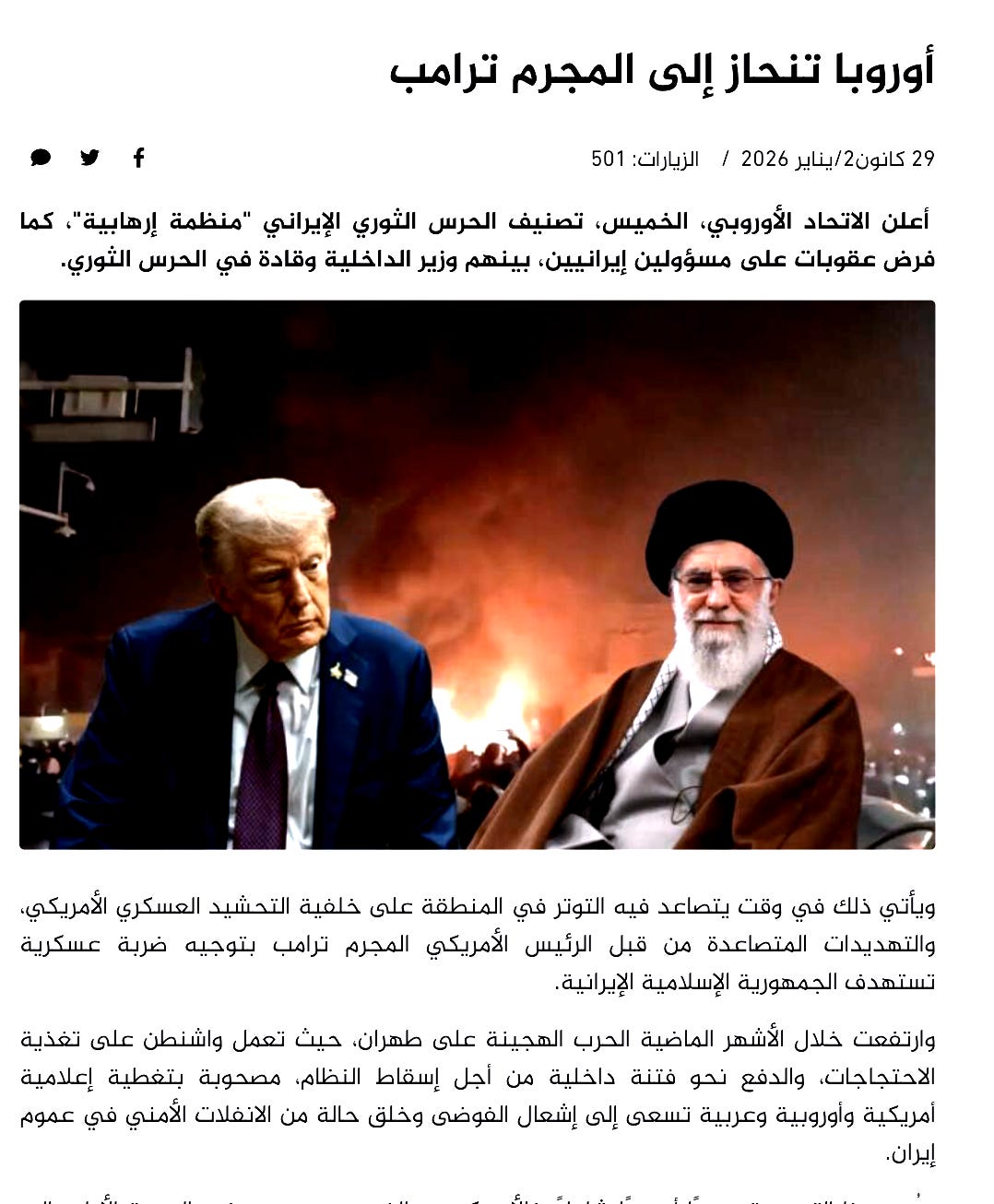
Russian media’s posture evolved notably over the week. Early coverage maintained an aggressive stance: RIA’s Victoria Nikiforova, under EU sanctions as a “central figure of government propaganda,” celebrated “turmoil” among American allies and urged middle powers to defect, while RT framed any potential U.S. strike on Iran as proxy war against Beijing (”Strike China through Iran”). But once diplomatic coordination with Trump materialized, Moscow pivoted to cooperative framing, positioning Putin as peacemaker and partner rather than adversary. This created a deliberate narrative split: Tehran, Sanaa, and Beirut cast Trump as “criminal tyrant” while Moscow pursued diplomatic rehabilitation.
The week featured notable escalation signals held in reserve. Iran-backed Houthi military media released Marlin Luanda strike footage on the second anniversary with detailed “Red Sea” missile specifications, yet no new kinetic action materialized. Iranian officials warned the Abraham Lincoln was a “legitimate target” and carriers were “sitting ducks,” but Tasnim notably made no mention of widely-reported IRGC exercises, noting only “foreign media claims.” This pattern suggests the Axis is maximizing narrative pressure while holding operational cards, preparing audiences for either negotiated de-escalation (via Gulf mediators and Russian backchannel) or regional conflagration that will be framed as American aggression against a unified resistance front.
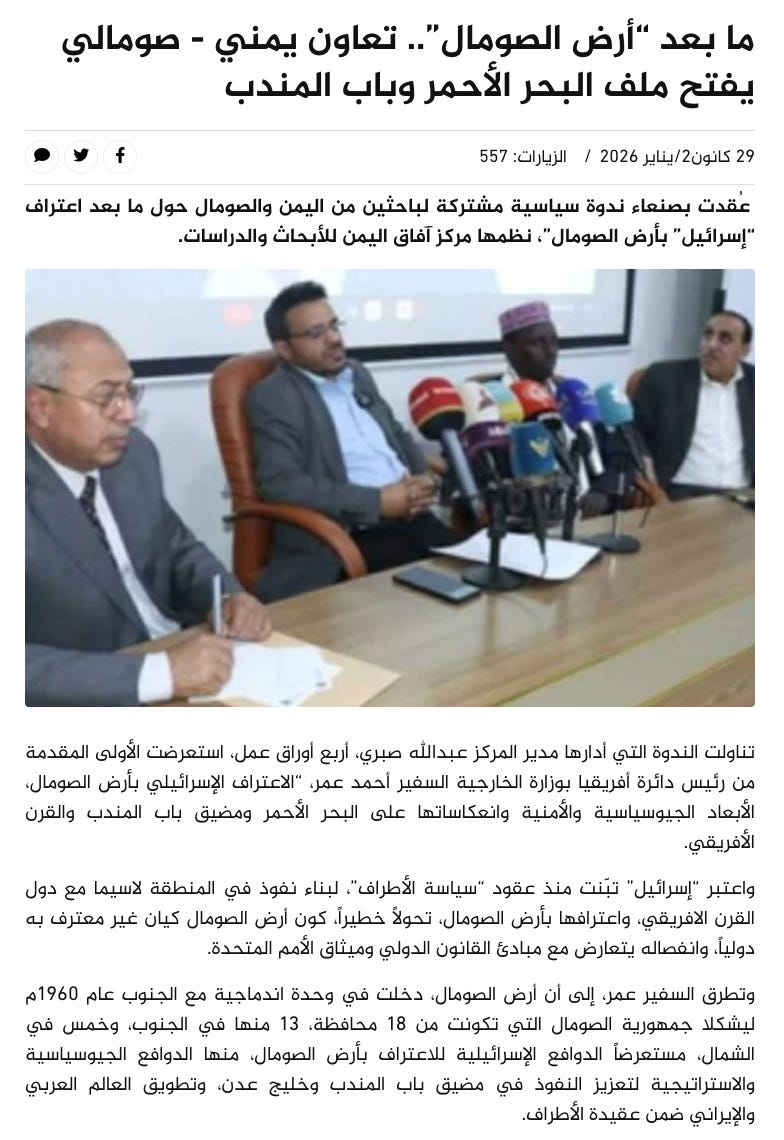
Iran-Russia-China announced the “Maritime Security Belt” joint naval exercise for late February, with Russia supplying Mi-28 helicopters and Spartak armored vehicles to Tehran. Hezbollah-aligned media published detailed analysis of post-Israeli strikes intelligence sharing between Beijing and Tehran titled “Toward Closing Pandora’s Box.” A Houthi-Somali joint seminar declared any Israeli base in Somaliland would constitute “a state of war,” expanding the Axis threat perimeter to the Horn of Africa. The system is building operational redundancy while conditioning audiences for an extended confrontation.
Russian Mediation Positioning
Russian media diverged sharply from other Axis nodes by framing Trump as a cooperative partner rather than an adversary. RIA Novosti highlighted Trump’s personal request to Putin to “refrain from strikes on Kyiv and other cities,” while RT amplified his use of the Russian pronunciation “Kiev,” symbolic alignment signals designed to frame Moscow as a reasonable partner while Washington plays aggressor elsewhere. This created a deliberate narrative split: Tehran, Sanaa, and Beirut cast Trump as “criminal tyrant” while Moscow pursued diplomatic coordination.
This marked a notable shift. Earlier in the week, Russian media had maintained a more aggressive posture: RIA’s Victoria Nikiforova