


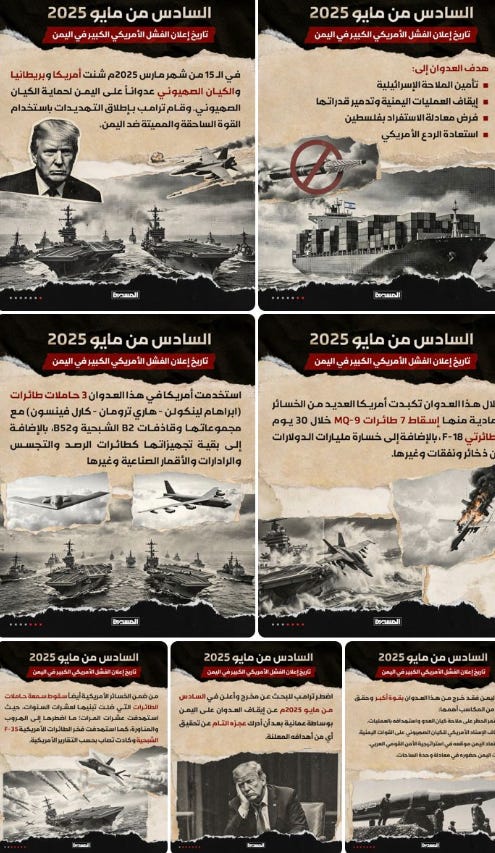
This week is the first anniversary of the May 6, 2025 ceasefire, which Houthi outlets and commentators view as a victory. Analysts on Houthi outlets described the U.S. as having suffered two defeats in the Red Sea, linking the May 6 narrative to Operations Prosperity Guardian and Rough Rider. Another editorial declared that the balance of power in the world is changing, and the sun of unipolar hegemony has begun to set. The victory claim hardened across the week before any actual settlement. The U.S. suspension of the maritime push to reopen Hormuz, the Iranian rejection of the American draft, and the Pakistani-mediated Iranian counter-response were treated as one continuous victory arc.
Domestically, Houthi mobilization continued, albeit on a smaller scale than earlier this quarter. The Houthis’ peculiar campaign against Saudi Arabia, which surfaced last week through the Tanuma file, continued through the commemoration itself and through the May 8 commemoration of the 2015 strikes on the al-Hadi and Hussein al-Houthi shrines. A ground-readiness layer continued underneath, working through summer-course graduates, tribal armed gatherings, and combat drills using the phrase “the coming round.”
Week in Brief
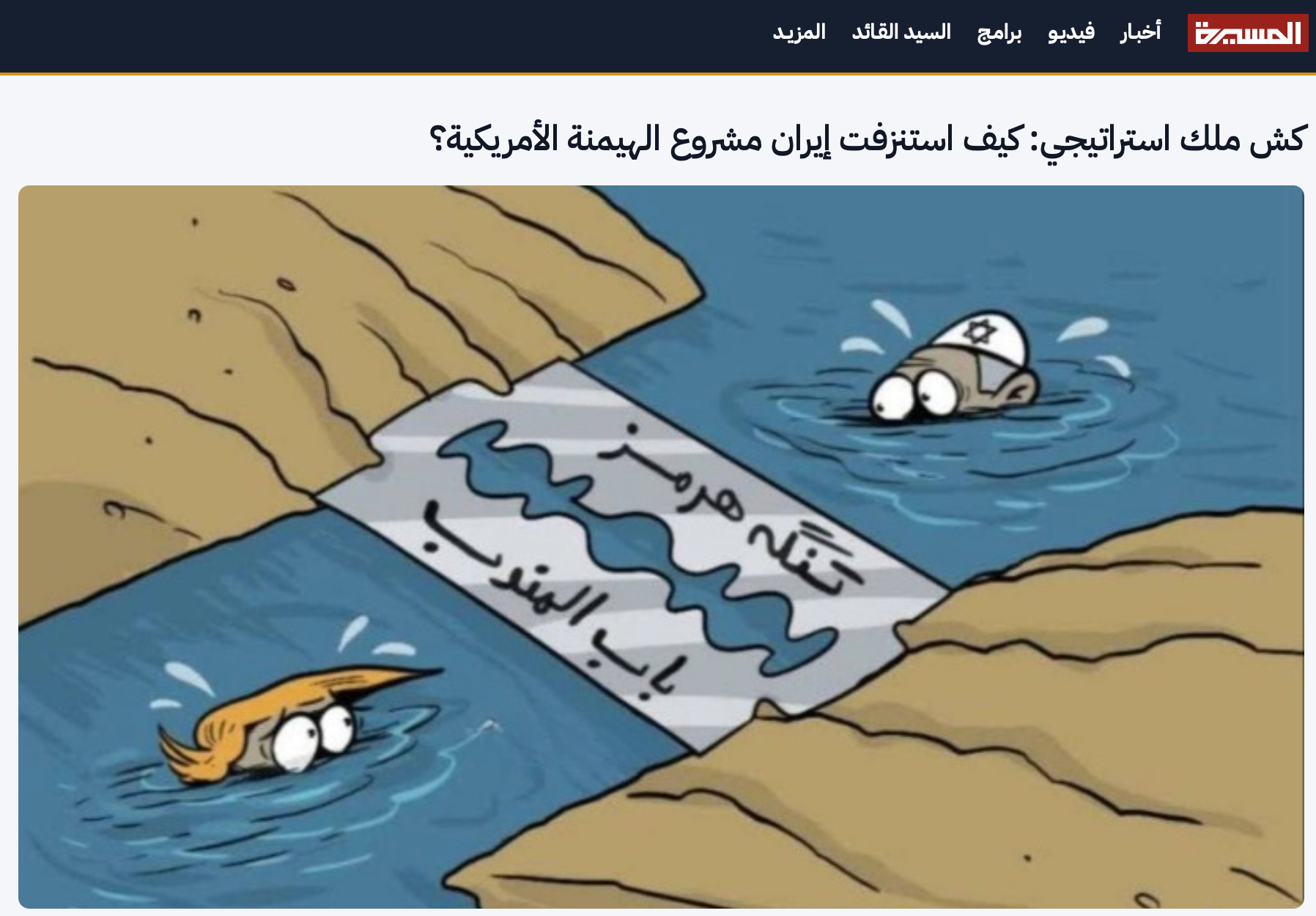
Houthi outlets returned to one argument across the week. The May 6 ceasefire was the moment American projection of force in the region collapsed. Hormuz is the next chapter of the same story. The Houthis are the originating end of an arc that has now reached Iran