


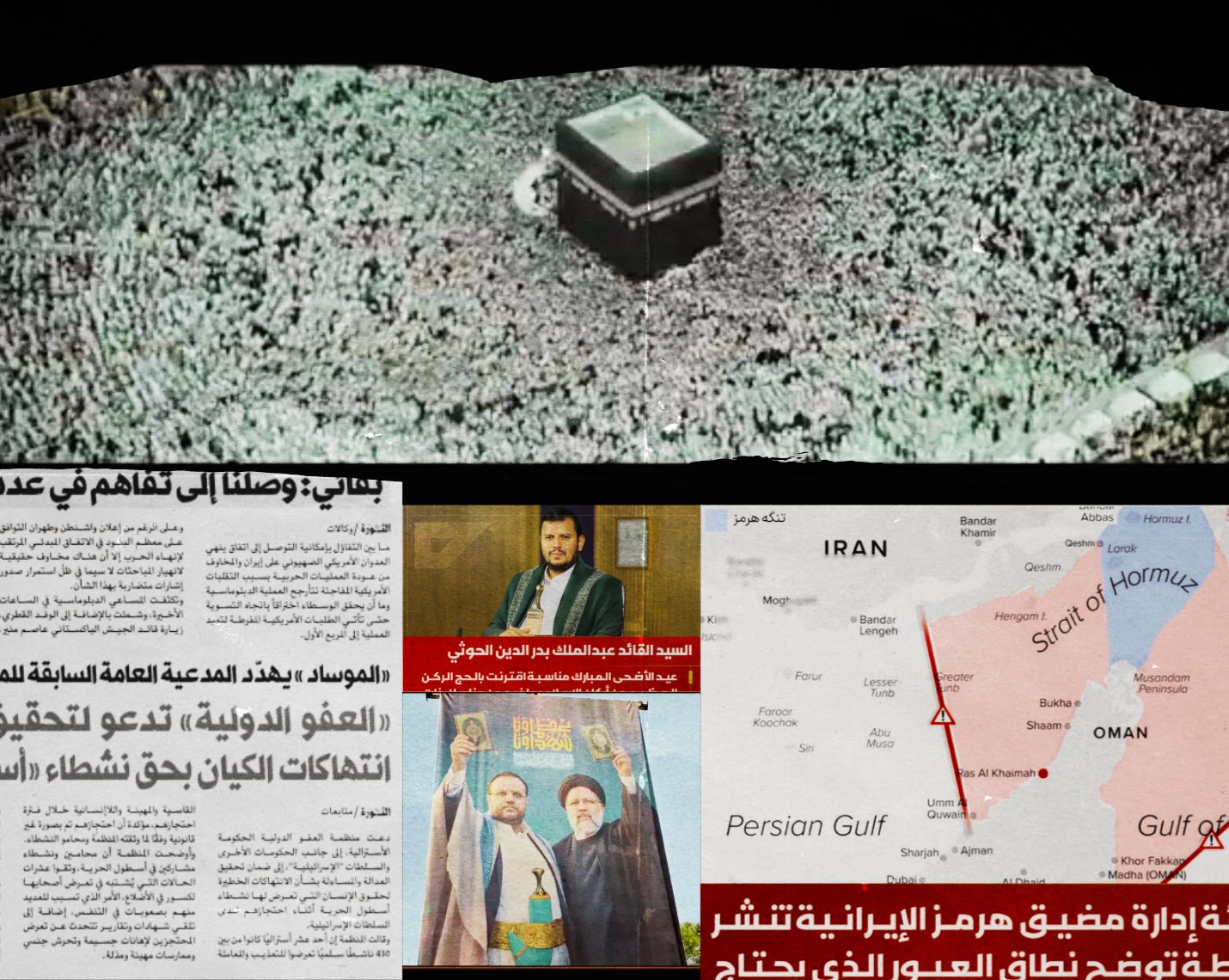
The two major events in the week that the Iran-backed Houthis focused on were Hajj, the annual Muslim pilgrimage to Mecca, and Yemeni Unity Day on May 22, the anniversary of the 1990 unification of North and South Yemen, which the Houthis commemorated despite holding no territorial control over the south. Abdul-Malik al-Houthi, the leader of the Houthi movement, delivered successive religious lectures across the week, laying out the ethos and logos of the movement and doubling down on the fusion of religious authority and political governance that anchors his political imagination. Mahdi al-Mashat, chair of the Supreme Political Council and head of the Houthi government in Sanaa, used Unity Day as a political opportunity to address regional governments, warning that “if neutrality today is treason, providing facilities to the enemy is high treason,” renewing unconditional Yemeni solidarity with Iran’s right to manage the Strait of Hormuz, and addressing 1994 civil war grievances directly to court southern audiences. On Eid al-Adha, May 26, Houthi outlets published a letter from Mojtaba Khamenei to Hajj pilgrims declaring that “America will no longer have a safe haven in the region after this,” sharpening the anti-American frame around the pilgrimage from Tehran.
Week in Brief
Abdul-Malik al-Houthi delivered a daily religious lecture series that set the political vocabulary for the rest of the Houthi-aligned media field, building doctrinal infrastructure for an internal-security campaign and a sharpening of the case against Saudi religious authority during Hajj. Mahdi al-Mashat, chair of the Supreme Political Council, used Unity Day to address governments in the region directly, warning that “if neutrality today is treason, providing facilities to the enemy is the greatest treason,” renewing full solidarity with Iran’s right to manage the Strait of Hormuz, naming “American-Saudi aggression,” and denouncing the “Somaliland” normalisation with Israel as a danger to Yemen and the region.