Ceasefire, Iran, and the Houthi Victory Loop
The Houthis are using the ceasefire to stand at the back gate, projecting Red Sea leverage that outpaces their actual capacity.
The ceasefire between Washington and Tehran was barely hours old before the Houthis began annexing it, folding Tehran’s deal with Washington into their own narrative of victory, deterrence, and regional indispensability. But annexation requires an audience, and the Houthis know exactly who theirs is: a Gulf audience, a domestic base, and a Western policy sphere they can manipulate in parallel. To understand what this ceasefire actually changes, it helps to listen not to the patrons who signed it but to the proxies who are already rewriting its terms. This is a quick reading on how the Houthis reacted to Trump’s ceasefire with Iran on April 7th. The short version is that they declared victory immediately, which is what we expected, but the details are worth your time.
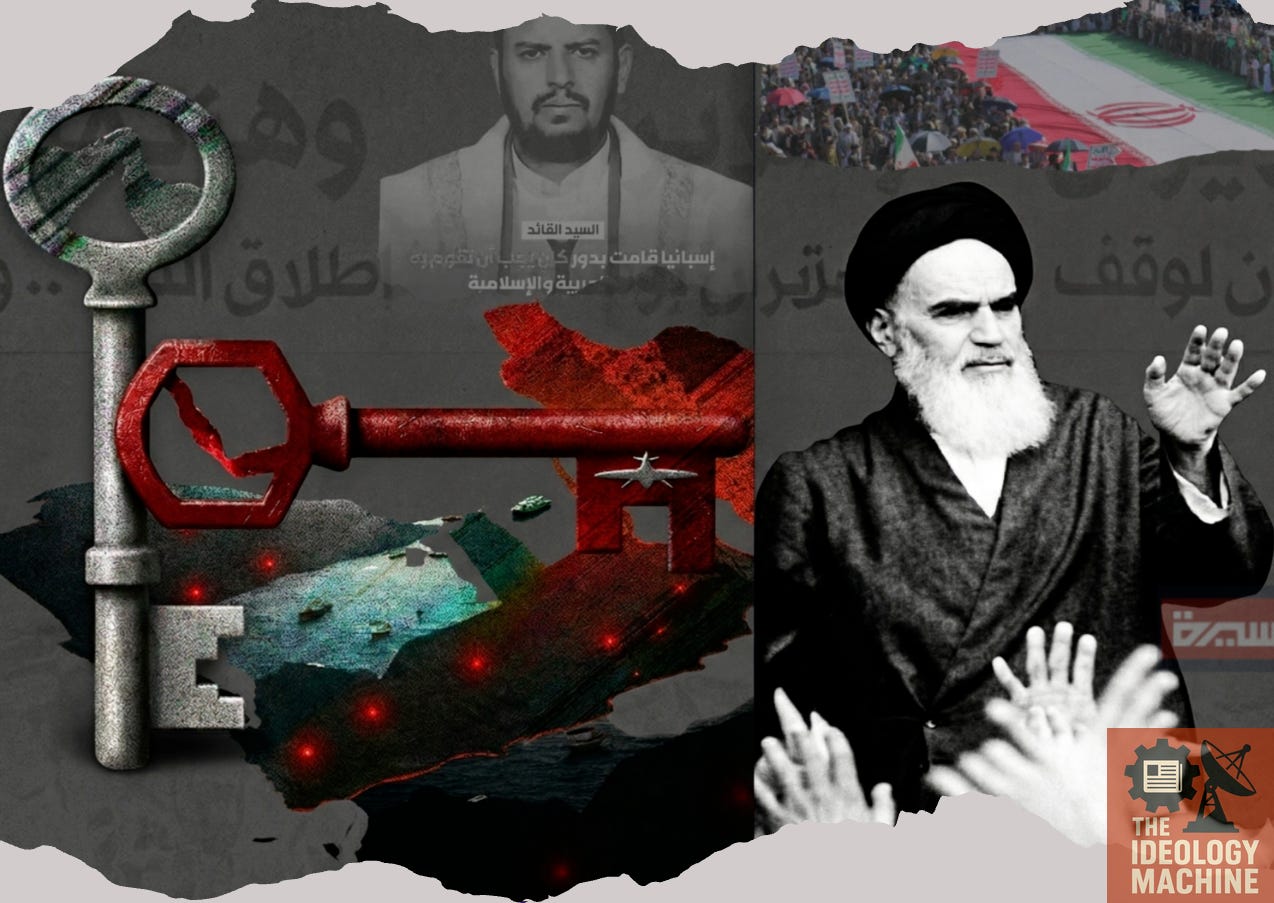
Houthi social media, opinion writers, the parliament, and the foreign ministry had all issued statements. The political council floated Yemeni sovereignty over Bab al-Mandeb, which is the usual bluster we have come to expect from the Houthis. The foreign ministry framed the ceasefire as an opportunity for Gulf states to rethink their alliances with Washington, while Houthi outlets examined and gleefully amplified US and Israeli self-criticism, from the New York Times to Ma’ariv. Throughout all of it, Houthi officials and Iranian state media in Arabic reinforced each other in a closed loop designed to look like a consensus.
Naturally, the Houthis need this to be their victory because, without Iran’s war, they are a movement governing one-third of a country that has slipped from the center of regional priorities. The ceasefire gave them twenty-four hours of relevance, and they used every minute of it. Here is what we found.
The first theme we observed was straightforward triumphalism, as expected, and this was emphasized by many senior leaders in the Houthi establishment. Their Shura Council member (Abdulsalam Jahaf) mocked both Trump and Netanyahu for finding themselves a way out and called Trump “the liar of the age.” A member of the Political Bureau (Salim Al-Moghales) stated that Trump spoke about Iran’s conditions with deference, which is bizarre given the apocalyptic framing Trump had adopted barely a day before. Naturally, their framing was unambiguous. The ceasefire was not a negotiated outcome but a capitulation of the United States, extracted by force.
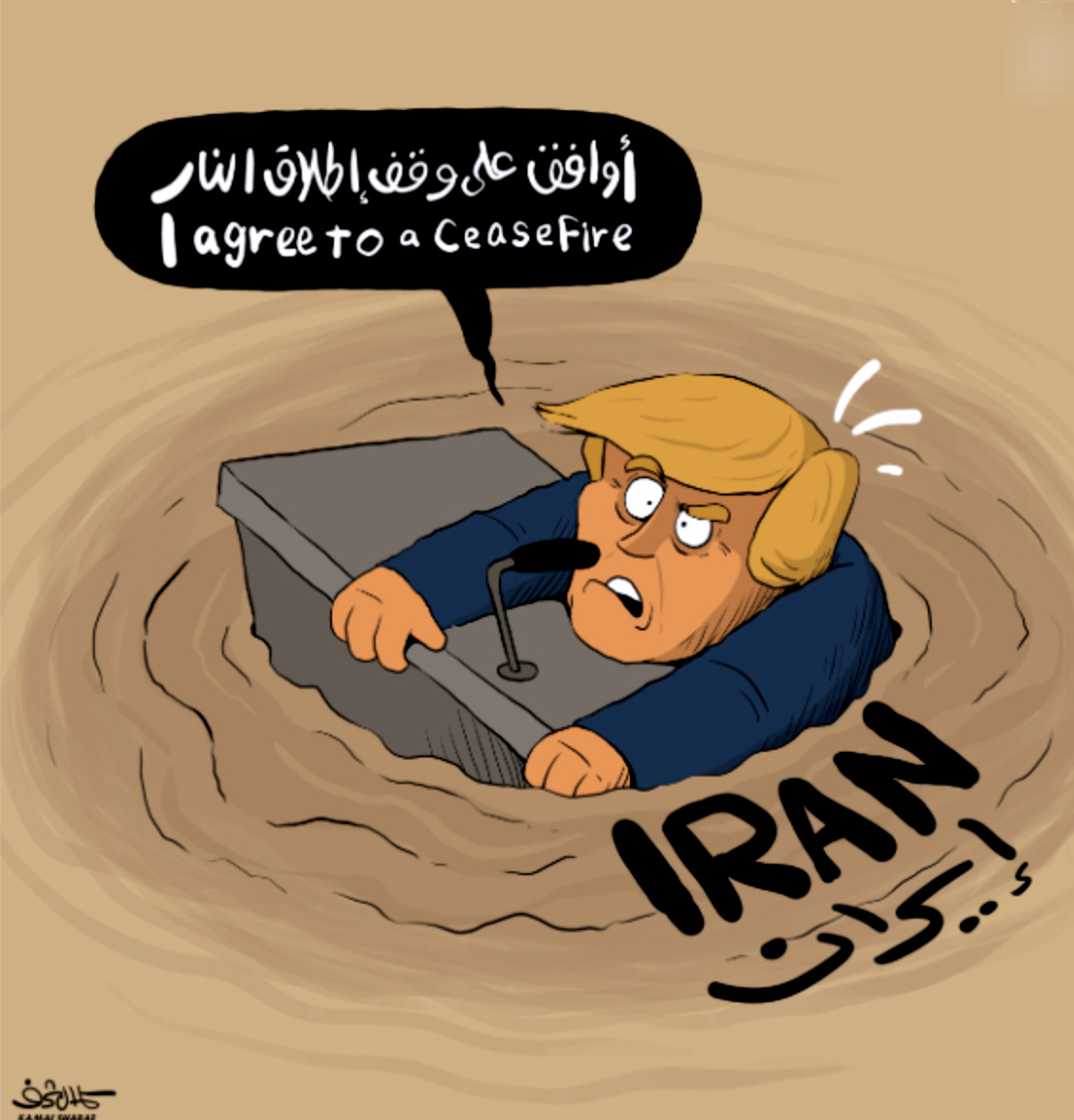
The second was the insistence that no ceasefire is legitimate unless it includes Lebanon, a threat that gained urgency following Israel’s unexpected strikes after the announcement, roughly a hundred missiles in ten minutes. Jahaf warned that Iran would withdraw from the agreement if strikes on Lebanon continued, which is interesting because he was speaking on behalf of Tehran. The head of the Houthis’ Media Authority amplified Araghchi’s statement that America must choose between a full ceasefire and war through Israel. This is worth noting because last year, the Houthis had their very own ceasefire with the United States but continued to attack Israel without a problem. In any case, the purpose here is for the Houthis to keep the conflict frame alive and position themselves as stakeholders in theaters well beyond Yemen, which is what they have been doing recently.
The insistence that no ceasefire is valid unless it covers all fronts did not originate in Sanaa. It came from Iranian parliamentary spokesperson Ibrahim Rezaei, was published by Hezbollah-aligned Al-Mayadeen in Beirut, and was echoed by Nasruddin Amer, head of the Houthis’ Media Authority, within hours of Rezaei’s statement. That is a three-node relay with a single origin. We may not have details on command-and-control between Iran and the Houthis, but the Houthis will always reinforce Iran, and they have never fallen out of line.
The third was aimed at the Gulf. One of their commentators published a column entitled “Advice to Gulf Rulers,” warning that Iran is a loyal Muslim neighbor while the Americans and Zionists never will be, and that abandoning Tehran would make the Gulf states easy prey. This is a topic that is constantly debated in the region. The subtext is coercive. Iran, not Washington, is being presented as the region’s durable security provider.
The fourth technique was what the Houthis always do, which is use foreign voices to validate their narratives. By selectively amplifying Senator Chris Murphy’s warnings about the Strait of Hormuz or a New York Times analysis framing Iran as a fourth global power, the Houthis are doing what they do best. They take Western criticism out of context and present it to their audience as proof of Western defeat. If even the Americans are this worried, the logic goes, then the victory must be real. It is a cynical, if effective, use of Western media against itself.
Most importantly, the opinion pieces that were published on Houthi-aligned platforms. They went considerably further, but they reinforced what their leadership had told them. One op-ed was actually written by a member of the Supreme Political Council, in which he demanded the removal of all American and British military bases from Arab countries, financial reparations to Iran paid by the United States and the GCC on the grounds that the aggression launched from their territory (so yes, he was advocating on behalf of Tehran), and international recognition of Iranian and Omani sovereignty over the Strait of Hormuz. He specified only Iran and Oman, excluding Saudi Arabia and the UAE entirely. And then he stated that any discussion of Bab al-Mandeb Strait sovereignty belongs to Yemen, with its capital in Sanaa, meaning the Houthi-controlled areas. They are completely bypassing the internationally recognized Yemeni government and do not want it to even be acknowledged as the legitimate party in this conflict.
But how do we distinguish between propaganda and actual signaling? Most of what the Houthis produced is domestic mobilization. Their triumphalism is designed to justify continued conscription, resource extraction, and the mandate of Abdul-Malik al-Houthi. The insults, the cartoons, the selective amplification of Western media, all of it is directed toward an internal audience.
The foreign ministry’s statement differs because its language does not appear to have originated in Sanaa. It explicitly describes the ceasefire as an opportunity for regional states to reconsider their alliances with Washington and calls for new security arrangements independent of American involvement. That is clearly Tehran’s line, delivered in Arabic, aimed at Riyadh, Abu Dhabi, and the rest of the Gulf states. And when you consider the Shura Council’s framing of Trump’s acceptance as a ‘fundamental shift in the balance of power,’ it reads as bluster. But given how the ceasefire was actually conducted, the leverage Iran discovered is real, and it is one Tehran could press for a very long time.
If we read between the lines, the Houthis are focused on Israel. Al-Houthi stated that ‘we will never allow the Israeli enemy to single out any front, including the Palestinian front,’ and that Yemen is ‘ready for direct intervention to support the Palestinian front if Israeli aggression resumes.’ The entire focus on Lebanon seems to be given as a pretext for violating the ceasefire. In a sense, they are preparing their audience, and perhaps even the international community, for breaking the ceasefire to defend the Palestinians and to defend Lebanon. For now, the Houthis are 95% rhetoric and 5% action.
Now, with regard to Bab al-Mandeb, how should we read the rhetoric? The Houthis have fired on Israel a month after the war on Iran started, and spared the Red Sea. They have threatened the Red Sea prior to the conflict, and continue to do so without taking action towards their stated goals. And here is why: There is a difference between launching missiles at Israel and sustaining the kind of Red Sea interdiction campaign that reshaped global shipping routes in 2024, and one that can be done right now. Their campaign required supply chains, manufacturing capacity, and resupply networks that are currently under significantly more pressure than they were a year ago, with Bandar Abbas almost inoperational, with dhows coming from the Horn of Africa under increased scrutiny, and the Strait of Hormuz under close watch.
For the past month, the policy conversation was consumed by what the Houthis might do at Bab al-Mandeb, and that alone was a victory for the movement achieved without a single missile being fired in the Red Sea. The gap between what the Houthis say they can do and what they can operationally sustain is wider than most analysts acknowledge. When capacity is limited, you borrow deterrence from your patron and let the fear do the work that the missiles cannot. As I mentioned to Al-Monitor weeks before the ceasefire, just because the Houthis are naming a card does not necessarily mean they can play it. The true signals lie in their structural claims: the insistence that no axis front can be isolated and the bid to reposition Iran as the region’s security anchor.
Iran’s Supreme National Security Council victory statement explicitly named Yemen (meaning the Houthis) as co-participants, stating that Iran achieved its victory “with the support of the resistance front in Lebanon, Iraq, Yemen, and occupied Palestine.” The IRGC confirmed, “continued support for resistance fronts as part of the regional deterrence equation.” It may well be gratitude, but it is also a directive disguised as acknowledgment.
I have argued elsewhere that the Houthis appear to be cultivating informal economic arrangements around the Red Sea, echoing the IRGC’s model in Hormuz. Disrupting shipping indiscriminately risks undermining the very extraction networks that sustain their power.
Houthi outlets also weaponized Israeli media, amplifying Ma’ariv’s line that Trump and Netanyahu had gone “from the roar of the lion to the meow of the cat.” Israeli media is declaring the very defeat the Houthis want to narrate.

And on the ground, armed rallies were held across Sanaa with senior officials present, weapons on display, participants renewing their “absolute mandate” for Abdul-Malik al-Houthi and calling for donations to the missile, air, and naval forces. This says a lot. The Houthis want to show they have the capability and resources to fire. They also want to gather as much money as they can from the population in order to maintain their smuggling campaign and their violence in support of Iran. This is local resource mobilization in service of Iran’s wider campaign.
And of course, Abdul-Malik al-Houthi himself spoke today, on April 9th, delivering a speech congratulating Iran, praising the IRGC, and calling the Hormuz closure the most important lever in the war. What was interesting is that he introduced one notable formulation, that this victory “ended the equation of impunity,” meaning the era in which the US and Israel could strike without consequence is over. His strategic message completely mirrored the foreign ministry’s language, calling on all countries and governments in the region to reconsider what he called their “crooked orientations” of submitting to the enemy. He also spoke about the Red Sea to remind the world that the Houthis have leverage there.
It is also worth noting three additional lines from al-Houthi’s speech, each aimed at a different audience. The first was an explicit commitment that if hostilities resume, Yemen would participate in an “escalatory trajectory of military operations” and that no front in the axis would be left to face Israel alone. That is deterrence signaling aimed at Washington and Tel Aviv. The second was the claim that the release of Epstein documents was used to blackmail Arab leaders into supporting the aggression against Iran, with their files ready for publication if they refused. That is aimed squarely at Gulf publics, delegitimizing their own rulers by suggesting they were not willing participants but coerced through personal scandal. The third was singling out Spain for refusing to allow its territory and airspace to be used, and asking why Arab and Islamic states could not do at minimum what a European country did. That was both a reward mechanism for compliant countries and for the rest, it was shame as a weapon, holding up a European mirror to suggest that Arab capitals had less agency than a NATO member in Madrid.

This bravado about the Red Sea has dual purposes that are hard to miss. First, it projects power abroad while masking a movement that, domestically, is increasingly running on fumes. And second, for the Houthis, the missiles are the marquee attraction meant to justify the grueling reality of internal conscription and territorial expansion.
Ultimately, for the Houthis, this is a transaction, not a suicide pact. The Houthis are happy to act as the loud-voiced commentators of IRGC demands as long as it bolsters their own domestic mandate. They are willing to annex Tehran’s victory, but they have no intention of becoming its collateral damage. And let’s make one thing clear: neither is Tehran invested in their destruction; the IRGC does not build outposts only to abandon them when the rent comes due. The Iranian regime has nurtured the Houthis for two decades, a relationship that began with religious training in Qom in the 1990s and matured into a sophisticated military partnership by 2014. They did it by helping them survive, and they are of no use to the IRGC dead. For Tehran, the Houthis are the ultimate low-cost, high-reward outpost, a permanent second key to regional stability that ensures even when the front door in Hormuz is locked, the back gate in the Red Sea remains wide open.
The Houthis seem to have one template, and they paste every event into it. When the February strikes happened, they said, “We’re winning, they’re humiliated, we matter.” When Khamenei died, they said, “We’re winning, they’re humiliated, we matter.” Now with the ceasefire, the same bravado continues. The actual event could change, but the message never does. The specifics are often completely interchangeable, but the frame is not.
The people who should be paying closest attention to this are not in Washington or Tehran. They are in Riyadh and Abu Dhabi, where the Houthis are using Iran’s ceasefire to attempt to rewrite the region’s social contract, and that is exactly the IRGC’s intention. They are, in the end, the Arabic-language commentators of Persian-language demands, communicating Tehran’s terms to a Gulf audience in a language their viewers understand. The Houthis are faithful in their dissemination, and they are acting in concert with Iran. That much, at least, the ceasefire has made perfectly clear.


